Preparing the fitment studio
Models download in the background, so everything after this opens instantly.
▪ Fitment studio
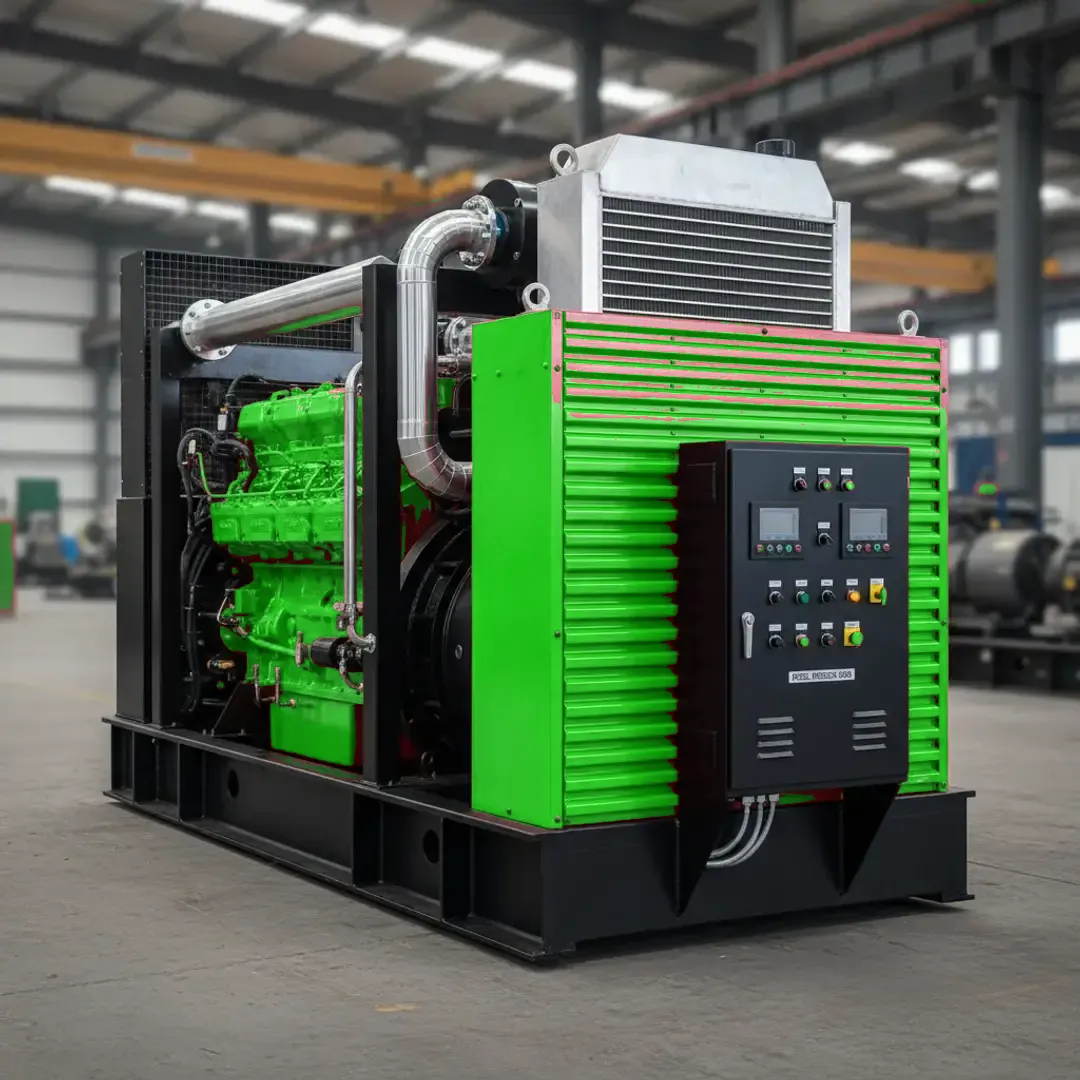
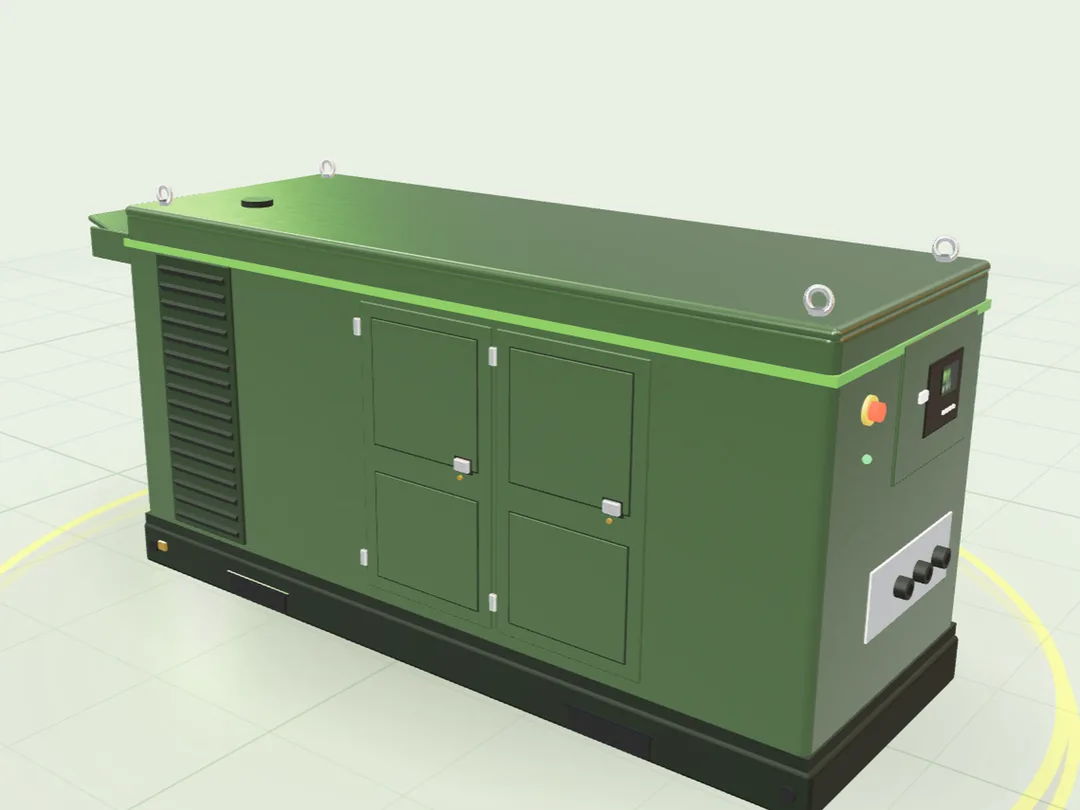
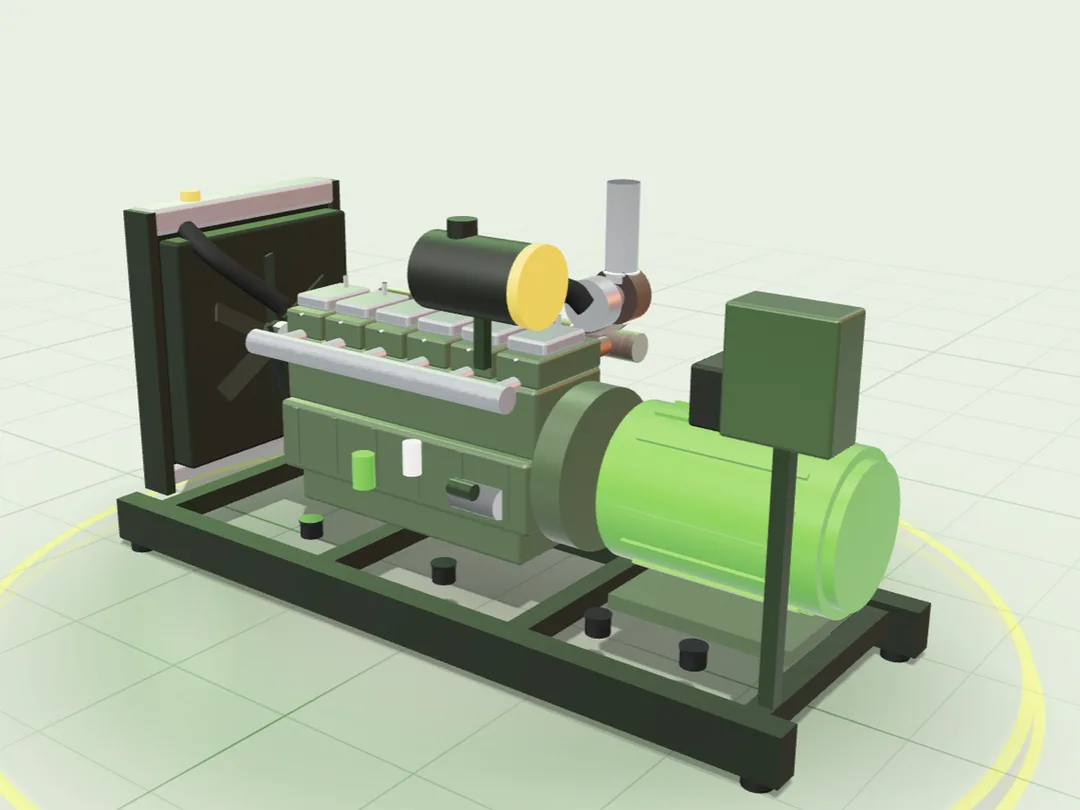
See a Green Boy genset fitted on your site
Choose a genset from 15 to 1250 kVA and an enclosure, then watch it lifted, positioned and connected in 3D, with its footprint, weight, fuel autonomy and live readings.
Drag to rotate · scroll to zoom. Dimensions, weight and fuel figures are indicative and confirmed in the quotation.
▪ GB-GS500
500 kVA, acoustic canopy
The set is started, load-tested and handed over with its commissioning report.
- Footprint
- 4.5 × 1.6 m
- Height
- 2.15 m
- Dry weight
- 5,120 kg
- Fuel tank
- 1000 L
- Prime power
- 400 kW
- Noise at 1 m
- 70 dB(A)
- Norm
- CPCB IV+ · 56 to 560 kW
- Frequency
- 50 Hz · 415 V
Output
300 kW
Voltage
416 V
Frequency
50.00 Hz
Fuel rate
82.0 L/h
Autonomy
12.2 h
Coolant
85 °C
Oil pressure
4.6 bar
▪ The limits
Emission limits for genset CI engines up to 800 kW
Values in g/kWh on the constant-speed or variable-speed test cycle, after deterioration and adjustment factors. Smoke is limited to 0.7 m⁻¹ at every load point. HC is total hydrocarbons for diesel engines.
| Power, kW | NOx | HC | NOx + HC | CO | PM | Typical control technology |
|---|---|---|---|---|---|---|
| P ≤ 8 | – | – | 7.5 | 3.5 | 0.30 | DOC, optional DPF |
| 8 < P ≤ 19 | – | – | 4.7 | 3.5 | 0.30 | DOC, EGR or urea-less SCR |
| 19 < P ≤ 56 | – | – | 4.7 | 3.5 | 0.03 | DOC + DPF, urea-less SCR |
| 56 < P ≤ 560 | 0.40 | 0.19 | – | 3.5 | 0.02 | DOC + DPF + Urea SCR + ASC |
| 560 < P ≤ 800 | 0.67 | 0.19 | – | 3.5 | 0.03 | DOC + DPF + Urea SCR + ASC |
Technology column is general engineering guidance, not part of the notification. The right package depends on the engine-out emissions and duty cycle.
▪ How far the limits moved
A 200 kW genset must now emit up to 90 % less
CPCB II limits for 75 to 800 kW engines (GSR 771(E), from 1 July 2014) compared with CPCB IV+ limits for 56 to 560 kW engines (GSR 804(E), from 1 July 2023). Carbon monoxide stays at 3.5 g/kWh in both.
NOx + HC
−0%CPCB IV+ value is 0.40 NOx + 0.19 HC.
Particulate matter
−0%▪ What it means
Above 56 kW, CPCB IV+ means SCR and DPF
Up to 56 kW
A combined NOx + HC limit of 4.7 g/kWh and, from 19 kW, a PM limit of 0.03 g/kWh. A DOC + DPF handles particulates; where NOx margin is tight, our urea-less Urea-Free SCR avoids an AUS 32 tank on small sets.
Learn more →56 to 560 kW
NOx falls to 0.40 g/kWh and PM to 0.02 g/kWh. In practice that needs urea SCR with an ammonia-slip catalyst plus a wall-flow DPF, as in the Urea SCR platform with closed-loop dosing.
Learn more →560 to 800 kW
NOx 0.67 g/kWh and PM 0.03 g/kWh. Large SCR volumes, careful mixing and thermal management keep conversion high on low-load standby duty.
Learn more →▪ Compliance path
New sets, installed sets and local rules
01
New gensets: type approval
Every engine for genset use up to 800 kW made, assembled or imported in India needs type approval and conformity-of-production certification from ARAI, ICAT or IIP before it can be sold or used.
02
Conformity of production
Production units are re-tested every COP year (1 July to 30 June) against the same limits, including deterioration factors, so aftertreatment must hold its performance over time.
03
Choosing a compliant set
Buy a set that carries valid type approval for its power band, and keep the approval and conformity documents on file. Older sets are not covered by CPCB IV+ and may face local restrictions.
04
Local tightening
CPCB, CAQM and state boards may set stricter local norms. Delhi NCR and several states already restrict DG set operation to compliant sets.
Sources
- GSR 804(E), MoEFCC, 3 November 2022 (via ARAI)
- Emission limits, applicability, test cycle and requirements (ARAI)
- CPCB system and procedure for genset engines up to 800 kW, 28 March 2023 (via ARAI)
- CPCB system and procedure for emission compliance of DG sets (CPCB II limits)
- Commission for Air Quality Management directions
This page summarises public notifications for general guidance and is not legal advice. Confirm requirements for your site with the certifying agency or your pollution control board.